
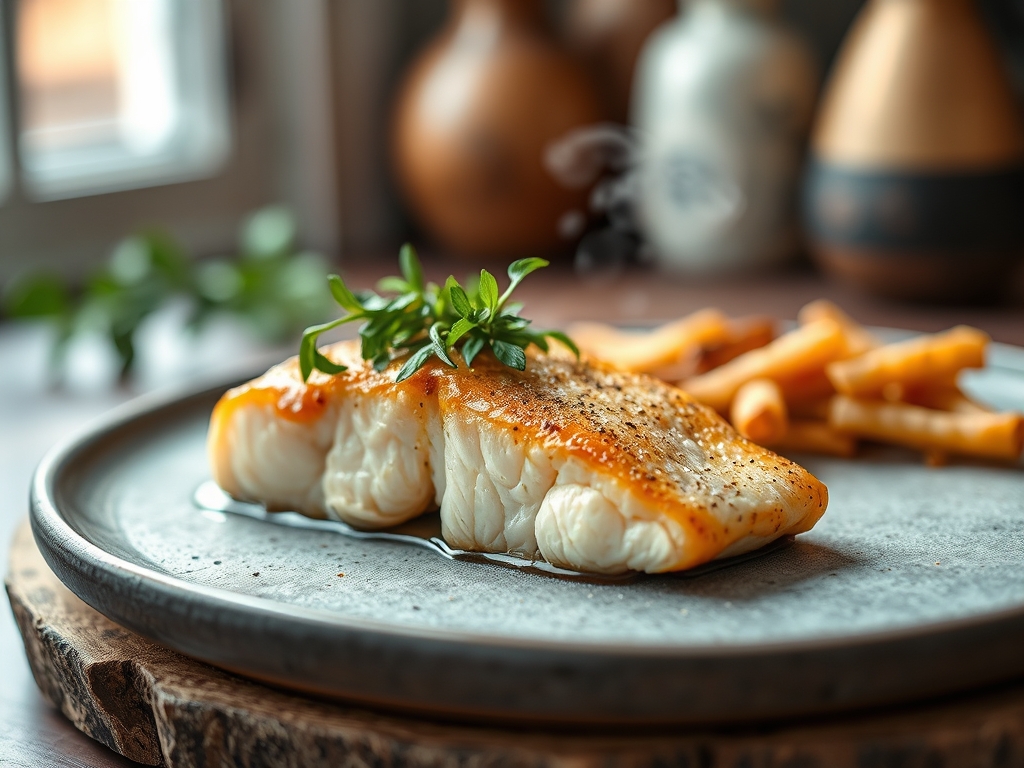
Imagine the sound of a cold, heavy-bottomed skillet hitting a gas flame while you kick off your heels. You want dinner, and you want it to taste like a sixty-dollar bistro entree without the hour-long wait or the pretentious white tablecloth. Finding easy to cook salmon recipes that actually deliver on flavor and texture is the ultimate kitchen win for a high-octane lifestyle. We are talking about that perfect, glass-like shatter of crispy skin and the buttery, translucent flake of a fillet that has been treated with just a little bit of scientific respect.
Salmon is the undisputed heavyweight champion of the weeknight hustle because its high fat content makes it incredibly forgiving. Whether you are dealing with a wild-caught Sockeye or a marbled King salmon, the goal is the same: high heat, minimal fuss, and a few clever hacks to bypass the prep work. We are going to dive into the molecular magic of the Maillard reaction and show you how to turn a basic piece of fish into a masterpiece in under fifteen minutes. Grab your favorite apron; we are about to make your kitchen the smartest room in the house.
The Gathers:
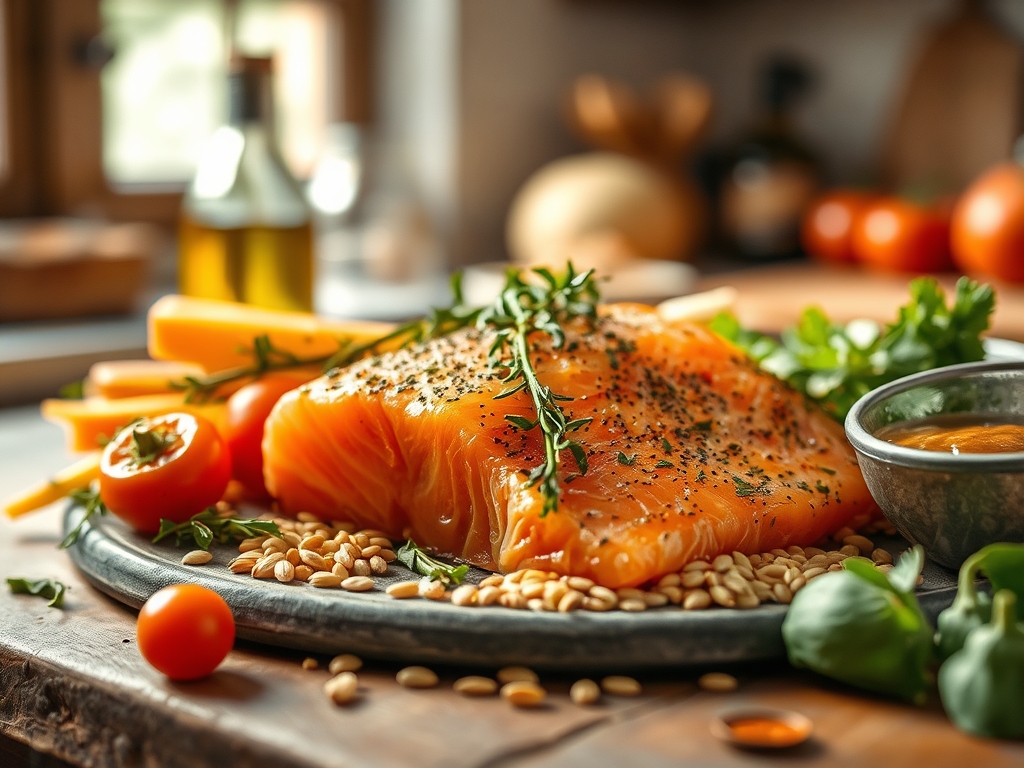
Before we ignite the burners, we need our mise-en-place to be airtight. Your primary asset is the salmon itself; look for fillets that are firm to the touch with no visible "gapping" between the muscle fibers. You will need a high-smoke-point lipid like avocado oil or clarified butter. Avoid extra virgin olive oil for the initial sear, as its low smoke point will acridly oxidize before your fish hits the target temperature.
Your toolkit is just as vital as your ingredients. Pull out your microplane for citrus zest, a pair of tongs with silicone tips to protect the delicate flesh, and a digital scale if you are portioning for precise macro tracking. For the aromatics, gather fresh dill, garlic cloves, and a piquant element like capers or stone-ground mustard. These acids are essential to cut through the viscous omega-3 fats of the fish.
Smart Substitutions:
If you are out of fresh lemons, a splash of rice vinegar provides that necessary bright acidity. No fresh herbs? A pinch of dried tarragon or fennel seed can infuse the oil with a sophisticated, licorice-like depth. If you find yourself without a heavy-bottomed skillet, a preheated sheet pan in a 450-degree oven can mimic the sear through intense conductive heat.
The Clock:
Efficiency in the kitchen is all about the Chef's Flow. This is the art of overlapping tasks so that no second is wasted. Your total active time for these easy to cook salmon recipes should hover around five minutes, with a total "plate-to-face" time of twelve to fifteen minutes.
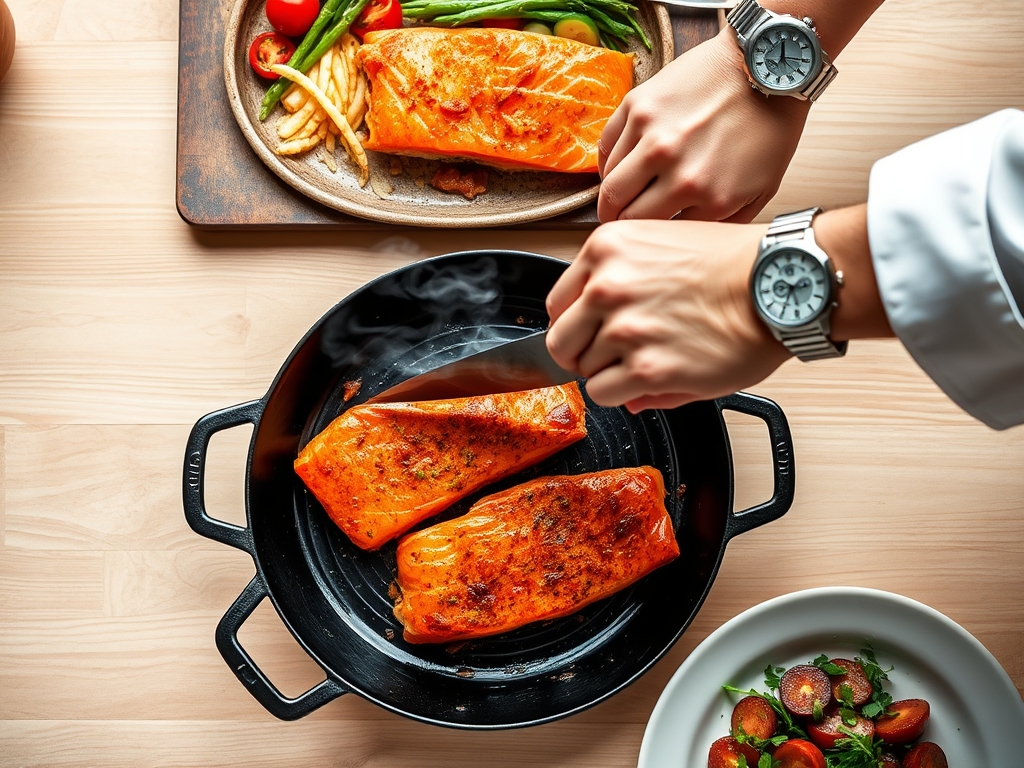
The flow works like this: The moment you walk into the kitchen, pull the salmon from the fridge. Cold fish in a hot pan causes the muscle fibers to contract violently, squeezing out moisture. Giving it ten minutes to lose its chill ensures an even cook. While the fish tempers, prep your glaze or seasoning. By the time your skillet is shimmering with heat, your prep is done. The actual cooking process is a sprint; usually four minutes on the skin side to render the fat and three minutes on the flesh side to reach a perfect medium-rare.
The Masterclass:
1. The Desiccation Maneuver
Use a paper towel to pat the salmon bone-dry. Any surface moisture will turn to steam, preventing the golden-brown crust you crave.
Pro Tip: This is about evaporative cooling. If the surface is wet, the temperature cannot rise above 212 degrees Fahrenheit, which is the boiling point of water. You need it higher to trigger the Maillard reaction for that savory flavor.
2. The Cold-Start Skin Sear
Place the salmon skin-side down in a cold pan, then turn the heat to medium-high. This allows the fat to render slowly as the pan heats up.
Pro Tip: Gradual heat prevents the skin from curling. As the fat renders, it fries the skin in its own oil, creating a crackling texture similar to bacon.
3. The Weight Press
Use a bench scraper or a heavy spatula to press down on the fillet for the first thirty seconds of cooking.
Pro Tip: This ensures total surface contact with the heat source. Without it, the protein strands contract and lift the center of the fish, leaving you with uneven browning.
4. The Butter Baste
In the final two minutes, drop a knob of butter and a smashed garlic clove into the pan. Tilt the skillet and use a spoon to shower the fish in the foaming fat.
Pro Tip: This is called Arroser. The hot butter carries the aromatics into every crevice of the fish while the milk solids brown, adding a nutty complexity.
5. The Acid Flash
Deglaze the pan with a squeeze of lemon or a splash of white wine just before pulling the fish off the heat.
Pro Tip: This deglazing process picks up the "fond" (the browned bits stuck to the pan), creating an instant, emulsified pan sauce that coats the salmon.
6. The Carryover Rest
Transfer the salmon to a warm plate and let it sit for three minutes before serving.
Pro Tip: Thermal carryover means the internal temperature will rise another five degrees after leaving the pan. Resting allows the juices to redistribute so they do not spill out when you take your first bite.
7. The Parchment Envelope
For a zero-cleanup hack, wrap the salmon in parchment paper with herbs and a splash of vermouth (En Papillote).
Pro Tip: This creates a convection chamber. The trapped steam gently denatures the proteins, resulting in a texture that is incredibly silky and moist.
8. The Honey-Soy Glaze
Brush a mixture of honey and soy sauce onto the fish during the last sixty seconds of broiling.
Pro Tip: The sugars in the honey undergo caramelization at high heat, creating a sticky, lacquered finish that balances the salty umami of the soy.
9. The Air Fryer Shortcut
Pop the seasoned fillet into an air fryer at 400 degrees for eight minutes.
Pro Tip: The high-velocity air creates a dehydration effect on the surface, mimicking a deep-fry without the excess oil, making it one of the most efficient easy to cook salmon recipes.
10. The Frozen Grate
If you forgot to thaw your fish, grate frozen ginger and garlic directly onto the frozen fillet before roasting at a lower temperature.
Pro Tip: Cooking from frozen requires a lower, slower heat to prevent the outside from overcooking before the center thaws. The aromatics infuse as the ice crystals melt.
The Deep Dive:
From a macro perspective, salmon is a powerhouse. A standard six-ounce serving provides roughly 34 grams of high-quality protein and 20 grams of healthy fats, primarily EPA and DHA. For those following a Keto lifestyle, salmon is a foundational staple. If you are Vegan, you can swap the salmon for a thick slab of cauliflower or firm tofu, using the same searing techniques to achieve a savory crust. For a Gluten-Free version, simply ensure your soy sauce is replaced with tamari or coconut aminos.
The Fix-It:
If your salmon looks like it has white "snow" on top, that is albumin, a protein that extrudes when the fish is cooked too fast or too long. To fix it, try a quick brine in salt water for ten minutes before cooking to tighten the protein structure. If the skin is sticking, your pan wasn't hot enough or you tried to flip it too early; wait for the fish to "release" naturally. If the interior is dry, you likely missed the carryover window; aim for an internal pull-temp of 125 degrees Fahrenheit.
Meal Prep:
When reheating salmon, avoid the microwave at all costs. The radiation vibrates water molecules so violently that it toughens the delicate fats. Instead, use a "low and slow" approach in a toaster oven at 275 degrees with a teaspoon of water covered by foil to re-moisturize the fibers.
The Wrap-Up:
You now have the technical blueprint to master easy to cook salmon recipes without breaking a sweat. By understanding the relationship between heat, moisture, and fat, you have moved beyond following a recipe to actually "commanding" the kitchen. These ten hacks are designed to fit into the cracks of a busy life, proving that you don't need hours to create a meal that feels like a celebration. Go ahead, get that skillet screaming hot, and show that fillet who is boss.
The Kitchen Table:
How do I know when salmon is done without a thermometer?
Press the top of the fillet gently with your finger or a fork. If the flakes begin to separate easily along the white fat lines (the lamellae), the salmon is medium-rare and ready to rest.
Why is my salmon skin always soggy?
Soggy skin is usually caused by residual moisture or overcrowding the pan. Ensure the skin is bone-dry before cooking and use a high-smoke-point oil in a preheated skillet to achieve a proper sear.
Can I cook salmon straight from the freezer?
Yes, but use the "low and slow" method. Roast at 325 degrees Fahrenheit covered in foil for fifteen minutes, then uncover and broil for the final three minutes to develop a crust and color.
What is the best way to store leftover salmon?
Place the cooled salmon in an airtight glass container. It will stay fresh in the refrigerator for up to three days. For the best texture, use leftovers cold in a salad or a grain bowl.