
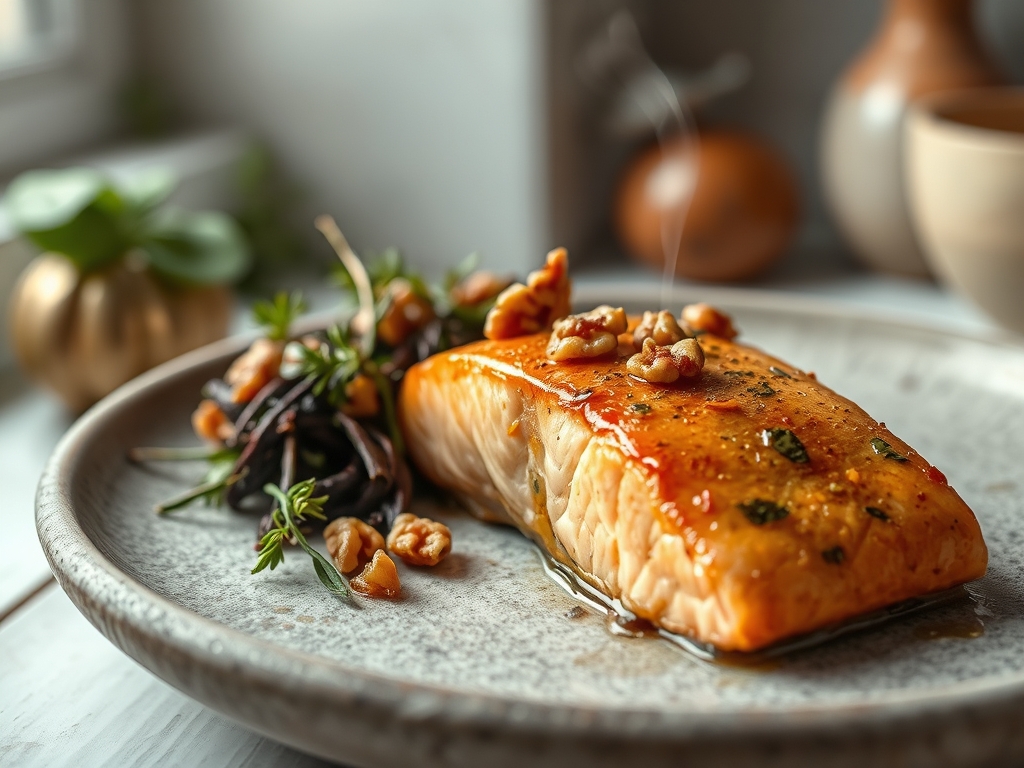
Imagine the sound of a heavy-bottomed skillet meeting the flame; it is a metallic chime that signals the start of something transformative. As the fat begins to render, the kitchen fills with the scent of toasted wood and sea salt. Mastering walnut salmon recipes is not just about dinner; it is about engineering the perfect contrast between buttery, flaky protein and a shattered-glass crunch.
We are chasing that specific sensory high where the earthy, tannic depth of the walnut meets the rich, omega-three laden profile of the fish. This is a study in texture. If you have ever suffered through soggy toppings or dry, overcooked fillets, you are in the right place. We are going to use molecular precision to ensure every bite is a balanced masterpiece of salt, fat, acid, and heat. From the piquant zip of a lemon zest infusion to the viscous cling of a honey-drip glaze, we are elevating the humble salmon into a gourmet experience that feels like a warm hug from a very smart, very chic friend. Grab your apron; we have some chemistry to do.
The Gathers:
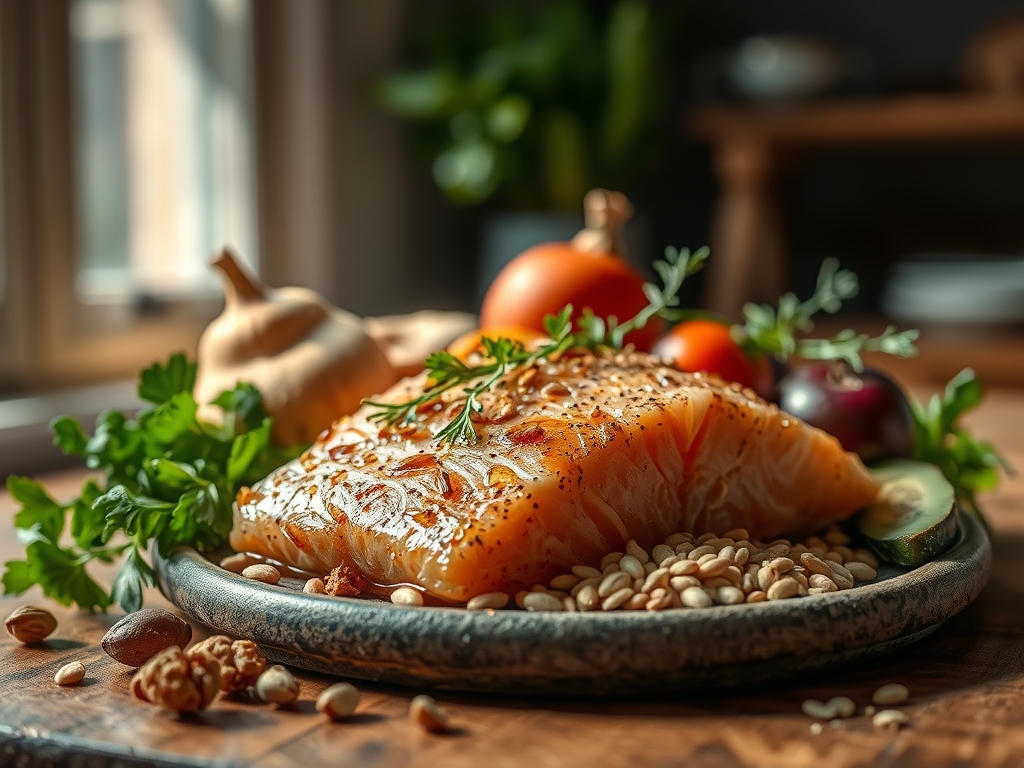
The secret to a flawless walnut salmon recipe lies in the mise-en-place. You cannot be fumbling for a microplane while your fish is hitting its thermal peak. Start with center-cut Atlantic or King salmon fillets; they offer the most consistent thickness for even heat distribution. For the "crunch" factor, use raw walnut halves. Raw nuts are essential because they will undergo their own Maillard reaction during the cooking process; pre-toasted nuts risk turning bitter and burnt.
You will also need a high-quality fat source to act as your binder. I prefer a mix of Dijon mustard for its emulsification properties and a touch of maple syrup for sugar-based browning. Add fresh herbs like dill or parsley to provide a chlorophyll-bright counterpoint to the heavy fats.
Smart Substitutions:
If you are avoiding nuts, sunflower seeds provide a similar fatty profile and crunch. For a low-carb swap, replace the maple syrup with a monk fruit syrup or simply increase the Dijon to maintain that viscous coating. If you lack a microplane for your citrus, a fine grater works, but be careful not to include the bitter white pith.
The Clock
Efficiency in the kitchen is about "Chef's Flow." You should spend fifteen minutes on prep and exactly twelve to fifteen minutes on active cooking. The goal is to minimize the time the fish spends out of the refrigerator to keep the muscle fibers tight.
While your oven preheats to 400 degrees Fahrenheit, use those five minutes to crush your walnuts. Do not pulse them into a dust in a food processor; use a heavy chef's knife to create variegated pieces. This creates a more interesting "mouthfeel" with different levels of crunch. Your total "active" time is less than thirty minutes, making this the ultimate weeknight power move.
The Masterclass
1. The Moisture Wick
Pat your salmon fillets bone-dry with paper towels. Any surface moisture will turn to steam, preventing the crust from adhering and the skin from crisping.
Pro Tip: This is about evaporative cooling. If the surface is wet, the temperature won't rise above 212 degrees Fahrenheit, which is too low for the Maillard reaction to occur.
2. The Emulsion Base
In a small saucier, whisk together Dijon mustard, honey, and a splash of lemon juice. You are creating a temporary emulsion that acts as a glue for your walnut topping.
Pro Tip: The mucilage in mustard acts as a natural stabilizer, ensuring the fat from the walnuts doesn't just slide off the fish as it renders in the oven.
3. The Walnut Infusion
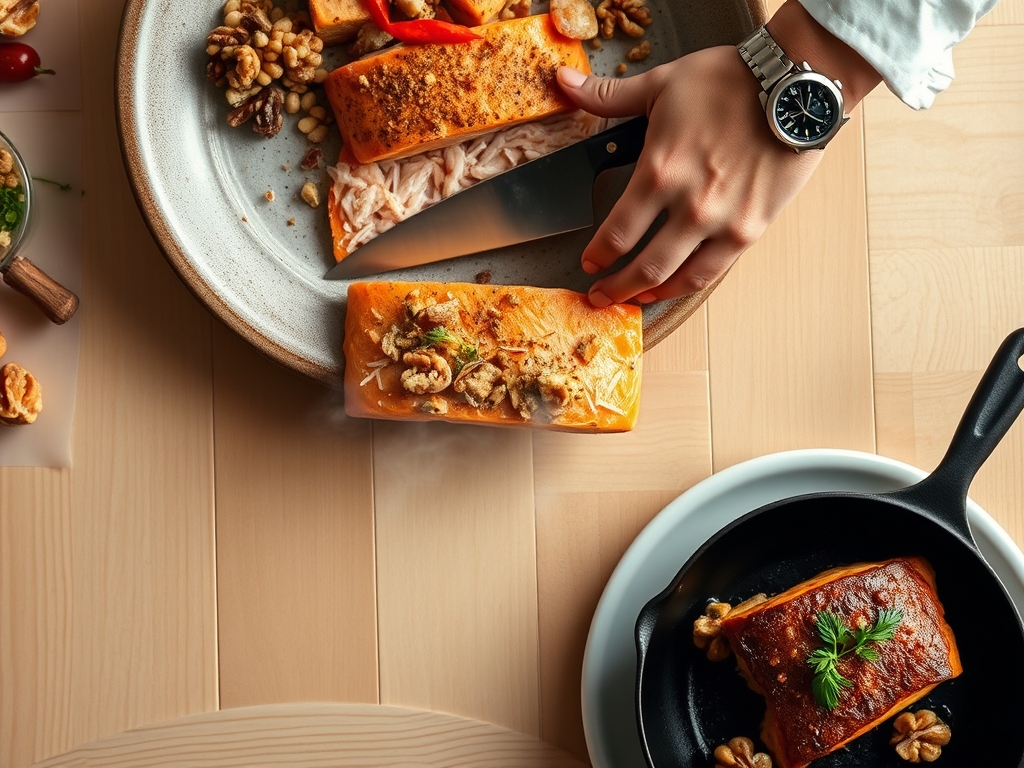
Press your chopped walnuts firmly into the top of the glazed salmon. Apply significant pressure with the flat of your knife or a bench scraper to ensure total contact.
Pro Tip: Maximizing surface area contact ensures that the heat from the air is conducted directly into the nuts, allowing them to toast in the salmon's own released oils.
4. The Thermal Ascent
Place the fillets on a parchment-lined baking sheet. Slide them into the center rack of the oven. This provides balanced convection airflow around the fish.
Pro Tip: Avoid the top rack initially to prevent enzymatic browning from turning into carbonization before the interior of the fish reaches its target temperature.
5. The Digital Check
Use a digital scale or, more importantly, a digital probe thermometer to check the internal temperature. Pull the salmon when it hits 130 degrees Fahrenheit.
Pro Tip: Thermal carryover will continue to cook the fish for several minutes after it leaves the oven, bringing it to a perfect, medium-rare 135 degrees.
6. The Acid Finish
Immediately after removing from the heat, use your microplane to zest fresh lemon over the crust and finish with a sprinkle of flaky sea salt.
Pro Tip: Adding salt at the end provides a hygroscopic crunch that hasn't been softened by the moisture released during the baking process.
The Deep Dive
Macro Nutrition:
Salmon is a powerhouse of Omega-3 fatty acids, specifically EPA and DHA, which are essential for brain health. When you add walnuts, you are introducing alpha-linolenic acid (ALA). Together, this dish is a cardiovascular goldmine. A standard six-ounce serving provides roughly 35 grams of protein and 22 grams of healthy fats.
Dietary Swaps:
- Vegan: Try this exact walnut crust on a thick "steak" of roasted cauliflower or firm tofu.
- Keto: Eliminate the honey or maple syrup; use an egg yolk as the binder for an ultra-rich, zero-carb version.
- Gluten-Free: This recipe is naturally GF, but ensure your mustard doesn't contain thickeners like wheat flour.
The Fix-It:
- Soggy Crust: Your oven wasn't hot enough. Fix it by popping the fish under the broiler for 60 seconds at the very end.
- Dry Fish: You missed the carryover window. Next time, pull the fish 5 degrees earlier. To save it now, drizzle with high-quality olive oil.
- Nuts Falling Off: You didn't use enough binder. Ensure the mustard coating is thick and "tacky" before pressing the nuts in.
Meal Prep & Reheating:
To maintain "day-one" quality, do not use a microwave. Microwaves vibrate water molecules, which turns your crisp walnut crust into a damp mess. Instead, reheat in an air fryer at 300 degrees for 4 minutes. This circulates hot air to re-crisp the fats while gently warming the protein.
The Wrap-Up
You are now officially a master of the walnut salmon craft. By focusing on the science of the sear and the chemistry of the crunch, you have turned a simple fillet into a restaurant-quality centerpiece. Remember; cooking is just delicious physics. Whether you are hosting a dinner party or just fueling your own fabulous life, these techniques ensure you never have a boring meal again. Now, go grab those tongs and show that salmon who is boss!
The Kitchen Table
How do I keep the walnuts from burning?
Position your oven rack in the middle, not the top. If the nuts brown too quickly, tent the fish loosely with foil. This deflects direct radiant heat while allowing the ambient temperature to finish cooking the salmon's interior.
Can I use frozen salmon for this recipe?
Yes, but thaw it completely in the refrigerator first. Pat it extremely dry with paper towels. Frozen fish often releases more albumin (the white protein), so a thorough drying process is vital for the walnut crust to stick.
What is the best way to chop walnuts?
Use a heavy chef's knife on a stable cutting board. Aim for "pebble-sized" pieces rather than a fine powder. A variegated texture provides a much better crunch and prevents the topping from becoming a paste when mixed with the binder.
How do I know when the salmon is done without a thermometer?
Gently press the side of the fillet with a fork. If the muscle flakes easily along the natural white lines of fat, it is ready. The center should still look slightly translucent and feel firm but not bouncy.