
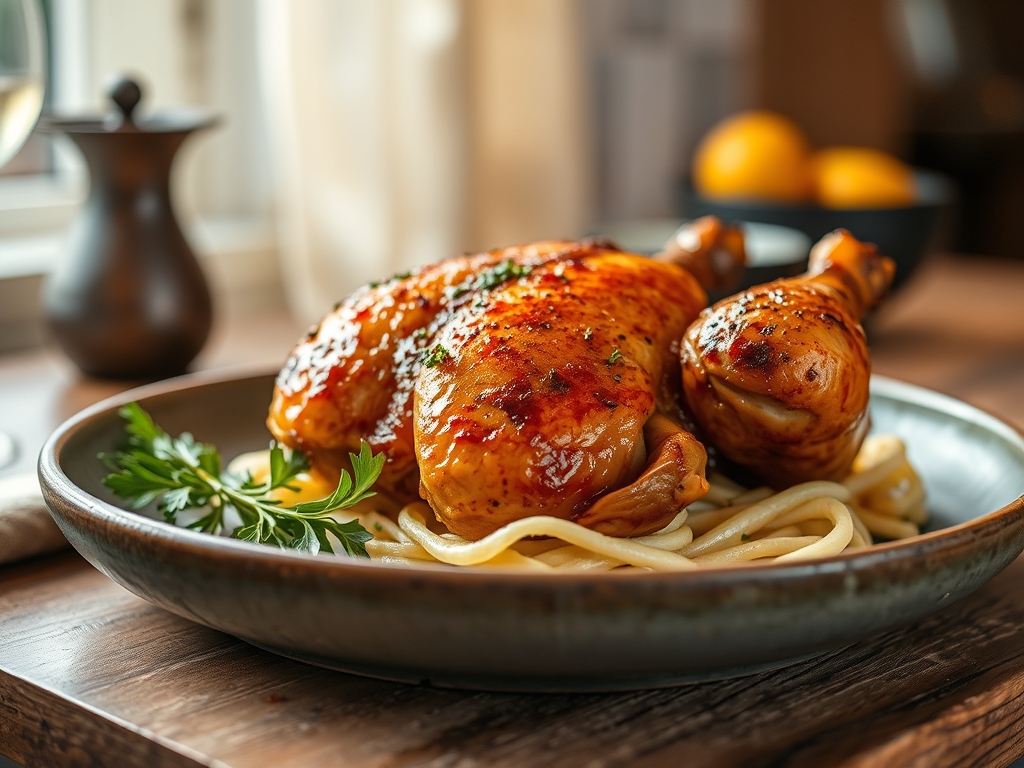
Picture this: you are standing in the grocery store at 5:30 PM, the fluorescent lights humming overhead while your brain feels like a browser with forty tabs open. Then, you smell it. That salty, savory, deeply caramelized aroma of the warming rack. Grabbing that plastic container is the ultimate life hack for fast rotisserie chicken recipes that actually taste like a five star meal. It is not just a shortcut; it is a pre-cooked canvas of perfectly rendered fat and tender protein waiting for a scientific glow-up.
We are moving beyond the basic "chicken and salad" rut. We are talking about utilizing the Maillard reaction already present on that golden skin to anchor complex flavors. Whether you are craving a piquant Thai curry or a silky, emulsified pasta sauce, that bird is your secret weapon. By the time you finish this, you will view that five dollar chicken as a high-density flavor bomb capable of feeding your family in under twenty minutes. Let us get into the chemistry of the quick fix.
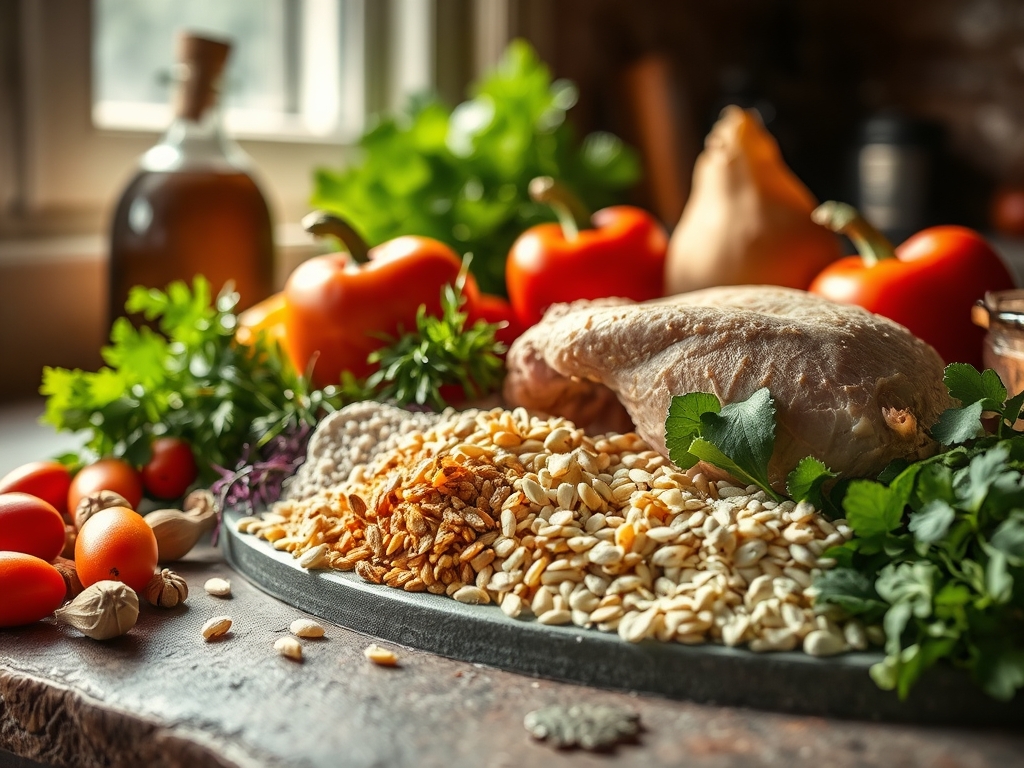
The Gathers:
To execute these fast rotisserie chicken recipes with precision, your mise-en-place must be tight. Start with the bird itself; look for one that feels heavy for its size, indicating it hasn't lost all its intracellular moisture to the heat lamp. You will need a sharp chef's knife and a sturdy bench scraper to move your proteins without losing those precious juices.
For the supporting cast, gather high-viscosity liquids like coconut milk or heavy cream to create stable emulsions. Fresh aromatics are non-negotiable. Use a microplane to zest limes and grate fresh ginger; this increases the surface area, allowing the essential oils to infuse your sauces instantly. Keep a bottle of high-quality fish sauce or soy sauce nearby to provide the umami backbone that complements the roasted notes of the poultry.
Smart Substitutions: If you are out of fresh aromatics, use a high-quality paste. If you need to lighten a sauce, swap heavy cream for Greek yogurt, but add it off the heat to prevent the proteins from denaturing and curdling. If the skin has lost its crunch, a quick flash in a heavy-bottomed skillet with a teaspoon of neutral oil will re-crisp those lipids in seconds.
The Clock
Efficiency in the kitchen relies on "Chef's Flow," which is the art of overlapping tasks to minimize downtime. For these fast rotisserie chicken recipes, your active prep time is roughly eight minutes, with a total cook time of twelve.
The flow begins with the breakdown. While your skillet or saucier preheats, you are carving the bird. By the time the pan reaches the Leidenfrost point (where water droplets skitter across the surface), your aromatics should be hitting the oil. You are not just cooking; you are managing a sequence of thermal events. Always chop your hard vegetables first and your soft herbs last to preserve their volatile compounds.
The Masterclass
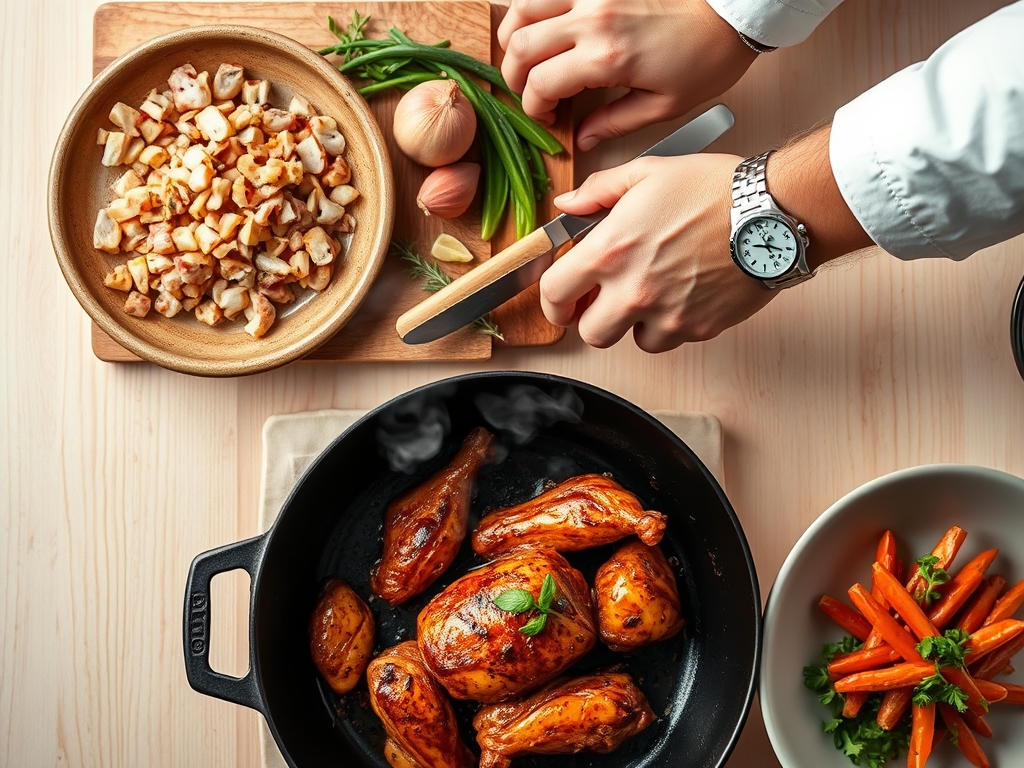
1. The Precision Breakdown
Do not just hack at the bird. Use tongs to stabilize the carcass and a sharp knife to slice through the joints. Remove the breasts, thighs, and wings, then shred the meat into uniform bite-sized pieces.
Pro Tip: Shred the meat while it is still slightly warm. The collagen in the connective tissue is more pliable, preventing the muscle fibers from tearing jaggedly.
2. The Aromatic Foundation
Heat your heavy-bottomed skillet and add a high-smoke-point oil. Toss in minced garlic, ginger, or shallots. You are looking for enzymatic browning here, not burning.
Pro Tip: Add a pinch of salt to your aromatics. This draws out moisture through osmosis, allowing them to soften and release flavor without scorching.
3. Deglazing the Fond
Once your aromatics are translucent, add a splash of wine, stock, or citrus juice. Use a wooden spoon to scrape up the brown bits (the fond) stuck to the bottom.
Pro Tip: This process captures the concentrated proteins and sugars from the pan surface, creating a complex flavor profile that mimics a slow-simmered sauce.
4. Integrating the Protein
Fold your shredded chicken into the bubbling sauce. You are not "cooking" the chicken further; you are merely performing a thermal transfer to bring it up to serving temperature.
Pro Tip: Overheating pre-cooked chicken causes the proteins to tighten and squeeze out moisture. Aim for a gentle simmer rather than a rolling boil to maintain a tender mouthfeel.
5. Emulsifying the Finish
If your recipe calls for butter or cream, stir it in at the very end. Use a whisk to aerate the sauce and create a stable suspension of fat and water.
Pro Tip: Cold butter added to a hot sauce creates a "beurre monte" effect, resulting in a glossy, viscous coating that clings to every piece of chicken.
6. The Brightness Boost
Finish with a hit of acid (lemon juice or vinegar) and fresh herbs. This cuts through the richness of the rendered chicken fat.
Pro Tip: Acid balances the pH of the dish, which "wakes up" your taste buds and enhances the perception of salt and spice.
The Deep Dive
When we look at the macro nutrition, a standard rotisserie chicken is a powerhouse of lean protein, though the sodium content can be high due to the commercial brining process. To balance this, pair your fast rotisserie chicken recipes with high-fiber grains like quinoa or cruciferous vegetables.
Dietary Swaps:
- Keto: Skip the pasta and serve the chicken in a creamy mushroom sauce over steamed cauliflower.
- Vegan/Plant-Based: While this guide focuses on chicken, you can apply the same "Masterclass" techniques to smoked tofu or seared oyster mushrooms.
- Gluten-Free: Use tamari instead of soy sauce and thicken your sauces with a cornstarch slurry instead of a flour-based roux.
The Fix-It:
- Problem: The chicken is too dry. Fix: Toss the meat in a small amount of warm chicken stock or a light vinaigrette before adding it to the main dish to rehydrate the fibers.
- Problem: The sauce is broken/oily. Fix: Add a tablespoon of heavy cream or a splash of water and whisk vigorously over low heat to re-emulsify the fats.
- Problem: The flavor is flat. Fix: Add a "pop" of umami. A teaspoon of miso paste or a few drops of Worcestershire sauce can save a bland sauce.
Meal Prep Science: To maintain "day-one" quality when reheating, use the low and slow method. Reheating chicken in a microwave often results in a "warmed-over flavor" caused by lipid oxidation. Instead, steam the chicken over a small amount of simmering water or broth to preserve its moisture.
The Wrap-Up
Mastering fast rotisserie chicken recipes is about respecting the chemistry of convenience. You are taking a shortcut, yes, but you are doing it with the technical prowess of a professional. By focusing on emulsification, thermal control, and umami balance, you can turn a humble grocery store bird into a rotation of dinners that feel intentional and sophisticated. Now, grab those tongs and get to work; your kitchen is waiting.
The Kitchen Table
How do I keep rotisserie chicken from getting rubbery?
Avoid high-heat microwaving. Instead, gently fold the chicken into your sauce at the end of the cooking process. This uses conductive heat to warm the meat to 165 degrees Fahrenheit without tightening the protein fibers into a rubbery texture.
Can I freeze leftover rotisserie chicken for later?
Yes. Shred the meat and store it in an airtight, vacuum-sealed bag to prevent sublimation (freezer burn). It will stay fresh for up to three months. Thaw it in the refrigerator overnight before using it in your favorite recipes.
What is the best way to use the leftover carcass?
Never toss the bones. Place the carcass in a stockpot with water, peppercorns, and vegetable scraps. Simmer for four hours to extract gelatin and minerals, creating a rich, viscous bone broth for future soups and sauces.
Is rotisserie chicken skin healthy to eat?
While the skin contains saturated fats, it also holds the majority of the seasoning and monounsaturated fats. If you are watching calories, remove the skin after cooking to retain the flavor it imparted to the meat during the roasting process.