
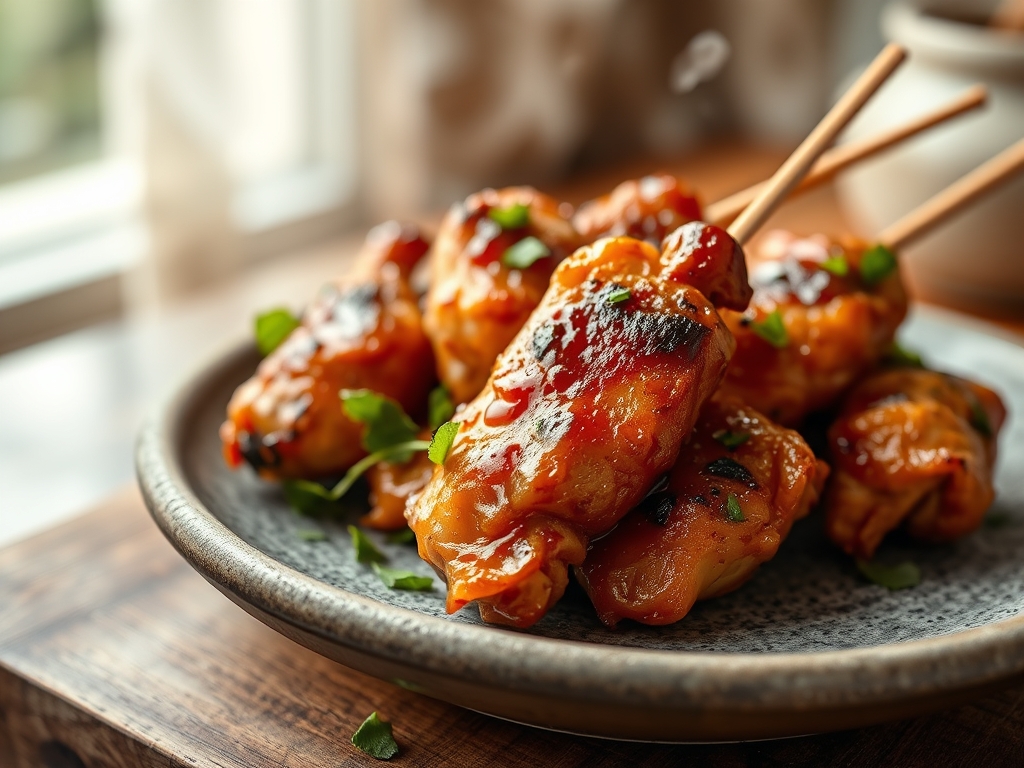
Close your eyes and imagine a narrow alleyway in Shinjuku where the air is heavy with the scent of charcoal and caramelizing soy. That intoxicating aroma is the hallmark of authentic yakitori chicken recipes; a culinary art form that balances the primal heat of fire with the delicate science of the glaze. It is more than just street food. It is a masterclass in texture and temperature.
Achieving that perfect, lacquered finish requires an understanding of how proteins react to intense, direct heat. When you master these yakitori chicken recipes, you are not just grilling meat on a stick; you are orchestrating a complex series of chemical reactions. We are talking about the Maillard reaction meeting high-moisture retention. It is the difference between a dry, bland skewer and a succulent, umami-packed bite that shatters slightly under your teeth before melting away. Let us get your kitchen smelling like a Tokyo night market.
The Gathers:
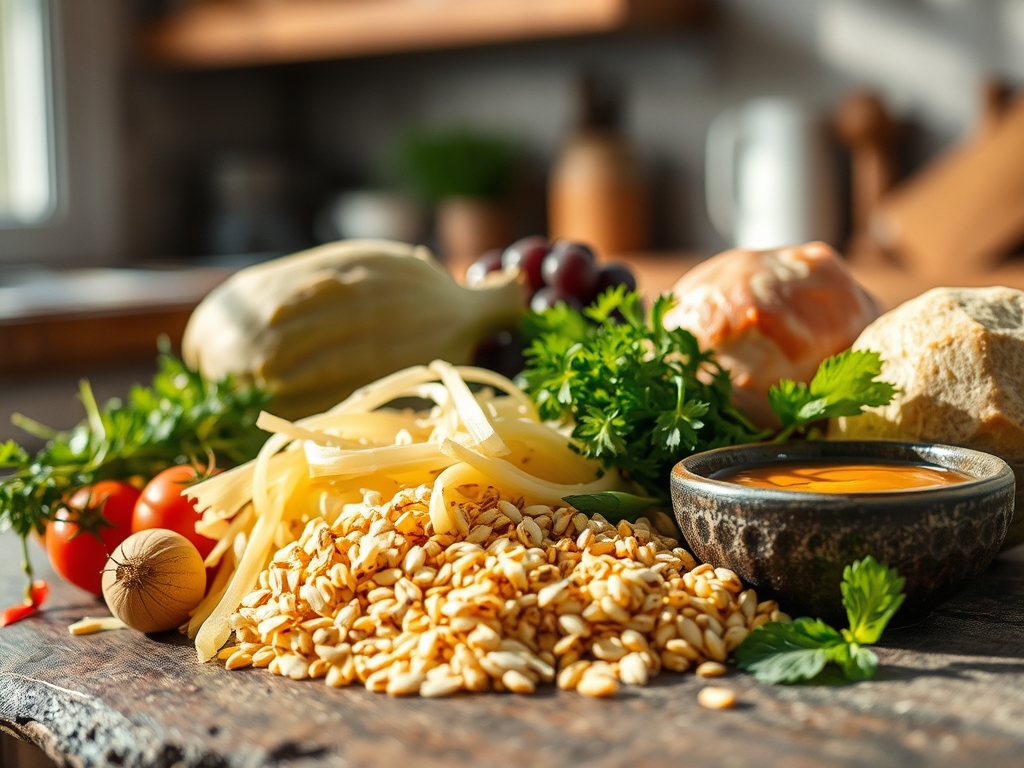
To begin, your mise-en-place must be precise. We are looking for high-fat, high-collagen cuts to ensure the meat stays juicy under the flame. Grab your digital scale to ensure your ratios are exact.
- Chicken Thighs (Momo): Opt for skin-on if possible. The fat will render and baste the meat naturally.
- Soy Sauce (Shoyu): This provides the salt and the deep color. Use a high-quality, naturally brewed variety for a more complex amino acid profile.
- Mirin: This sweet rice wine is essential for that glossy, viscous sheen. It contains complex sugars that do not burn as quickly as white sugar.
- Sake: The alcohol helps to denature the proteins, acting as a tenderizer while adding a subtle floral note.
- Aromatics: Fresh ginger and garlic. Use a microplane to grate these into a fine paste so they integrate into the sauce without leaving gritty chunks.
- Bamboo Skewers: These must be soaked in water for at least thirty minutes to prevent them from incinerating.
Smart Substitutions: If you are avoiding gluten, Tamari is a perfect one-to-one swap for soy sauce. If Mirin is unavailable, a splash of dry sherry mixed with a teaspoon of honey will mimic that fermented sweetness and help achieve the desired viscosity.
The Clock
Efficiency in the kitchen is all about the "Chef's Flow." For these yakitori chicken recipes, your active time is roughly 40 minutes, but the total elapsed time is closer to 90 minutes.
- Prep (30 mins): This includes soaking skewers, dicing the chicken into uniform 1-inch cubes, and preparing the tare (sauce).
- The Infusion (30 mins): Let the chicken sit at room temperature. Cold meat hits the pan and seizes, causing moisture loss.
- The Sear (15 mins): High-heat cooking happens fast. You need total focus here.
- The Rest (5 mins): Essential for thermal carryover, allowing the juices to redistribute through the muscle fibers.
The Masterclass
1. Constructing the Tare
In a saucier, combine your soy, mirin, sake, and aromatics. Simmer this mixture over medium heat until it reduces by nearly half. You are looking for a syrupy consistency that coats the back of a spoon.
Pro Tip: This reduction is a form of controlled evaporation. By reducing the water content, you concentrate the glutamates, creating an umami bomb that clings to the meat rather than sliding off.
2. The Precision Skewer
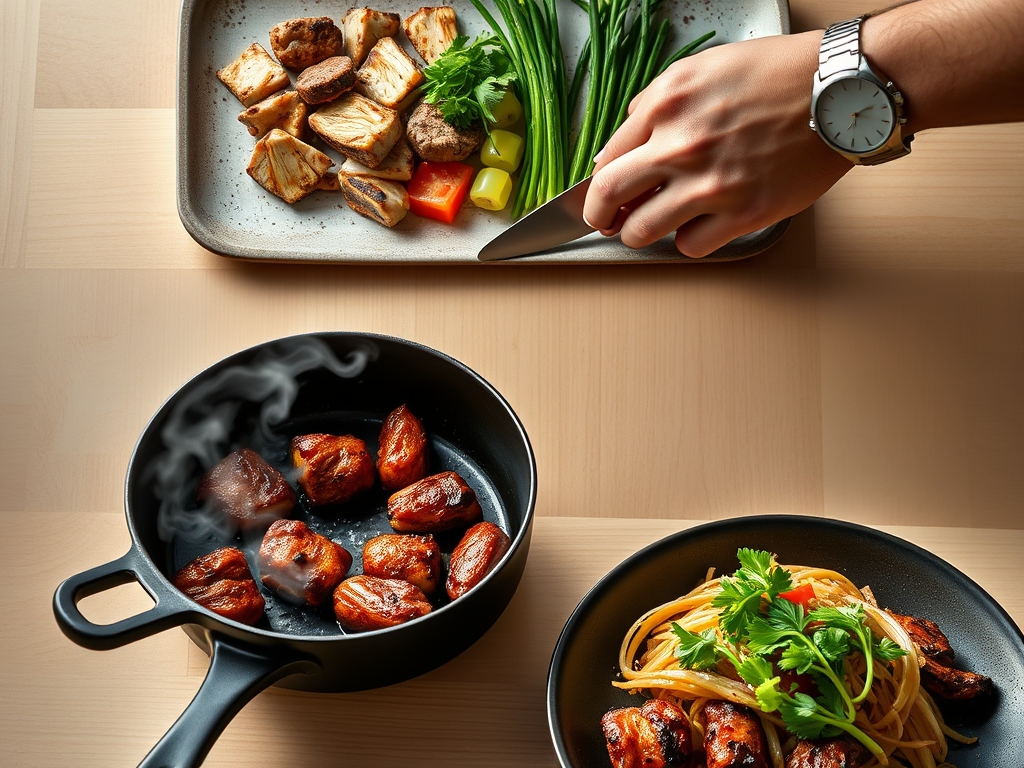
Thread the chicken onto your soaked skewers. Do not crowd the meat. Leave a tiny gap between pieces to allow the heat to circulate. If the meat is packed too tightly, the centers will steam rather than sear.
Pro Tip: Uniformity is key for thermal conductivity. Pieces of the same size will reach the safe internal temperature of 165 degrees Fahrenheit at the exact same moment, preventing some bites from overcooking while others remain raw.
3. The Initial Sear
Heat a heavy-bottomed skillet or a cast-iron grill pan until it is screaming hot. Add a high-smoke-point oil. Place the skewers down and do not move them for at least two minutes.
Pro Tip: This stage triggers the Maillard reaction. This is a chemical reaction between amino acids and reducing sugars that creates hundreds of different flavor compounds and that characteristic brown crust.
4. The Glazing Ritual
Once the chicken is 70 percent cooked, start brushing on the tare using a silicone brush. Turn the skewers frequently. The sugar in the sauce will begin to caramelize and bubble.
Pro Tip: This is called lacquering. By applying multiple thin layers of sauce rather than one thick one, you build a complex "skin" of flavor that is both smoky and sweet.
5. The Final Char
Give the skewers one last blast of heat to slightly scorch the edges of the sauce. This adds a hint of bitterness that balances the sweetness of the mirin.
Pro Tip: This brief exposure to extreme heat causes pyrolysis, which is the decomposition of organic matter by heat. In small doses, this creates the "charred" flavor that defines authentic yakitori.
The Deep Dive
Macro Nutrition: One serving of these yakitori chicken recipes (about three skewers) typically contains 280 calories, 32g of protein, 8g of fat, and 12g of carbohydrates. It is a high-protein, relatively lean meal if you use skinless thighs.
Dietary Swaps:
- Vegan: Use firm tofu or king oyster mushrooms. Press the tofu first to remove excess moisture so it absorbs the tare.
- Keto: Replace the mirin and sugar with a monk fruit sweetener and a splash of rice vinegar.
- GF: Ensure your soy sauce is certified gluten-free or use coconut aminos.
The Fix-It:
- Sauce is too thin: Continue to simmer. If desperate, whisk in a tiny cornstarch slurry to force gelatinization.
- Chicken is dry: You likely used breast meat or overcooked it. Use a digital thermometer next time and pull the meat at 160 degrees; carryover cooking will take it to 165.
- Sauce is burning: Your pan is too hot or you glazed too early. Move the skewers to a cooler part of the pan or lower the flame.
Meal Prep: To reheat and maintain "day-one" quality, avoid the microwave. Use a toaster oven or a pan with a splash of water and a lid. The steam will rehydrate the protein fibers without making the sauce soggy.
The Wrap-Up
You are now officially the master of the flame! These yakitori chicken recipes are your ticket to a sophisticated, flavor-packed dinner that feels like a total vacation. Remember, the secret is all in the reduction of the tare and the patience of the sear. Grab your tongs, fire up the stove, and let those aromatics fill your home. You have got the science, the tools, and the talent. Now, go eat!
The Kitchen Table
Can I use chicken breast for yakitori?
Yes, but be careful. Chicken breast lacks the fat of thighs and dries out quickly. Cut pieces smaller and reduce cooking time to ensure the meat stays moist. Always use a meat thermometer to pull them at exactly 160 degrees.
How do I stop my skewers from burning?
Soak bamboo skewers in cold water for at least 30 minutes before threading the meat. For extra protection, you can cover the exposed ends of the skewers with a small strip of aluminum foil while they are on the grill or pan.
What is the difference between Tare and Teriyaki?
Tare is the traditional basting sauce used in yakitori, often thinner and more complex with sake and mirin. Teriyaki is a broader term for a similar glaze but is often thicker and sweeter, sometimes containing ginger, garlic, or even sesame oil.
How long does the yakitori sauce last?
You can store leftover tare in an airtight container in the refrigerator for up to two weeks. Because of the high sugar and salt content, it preserves well. Use it to glaze salmon, stir-fry vegetables, or even as a dip.