
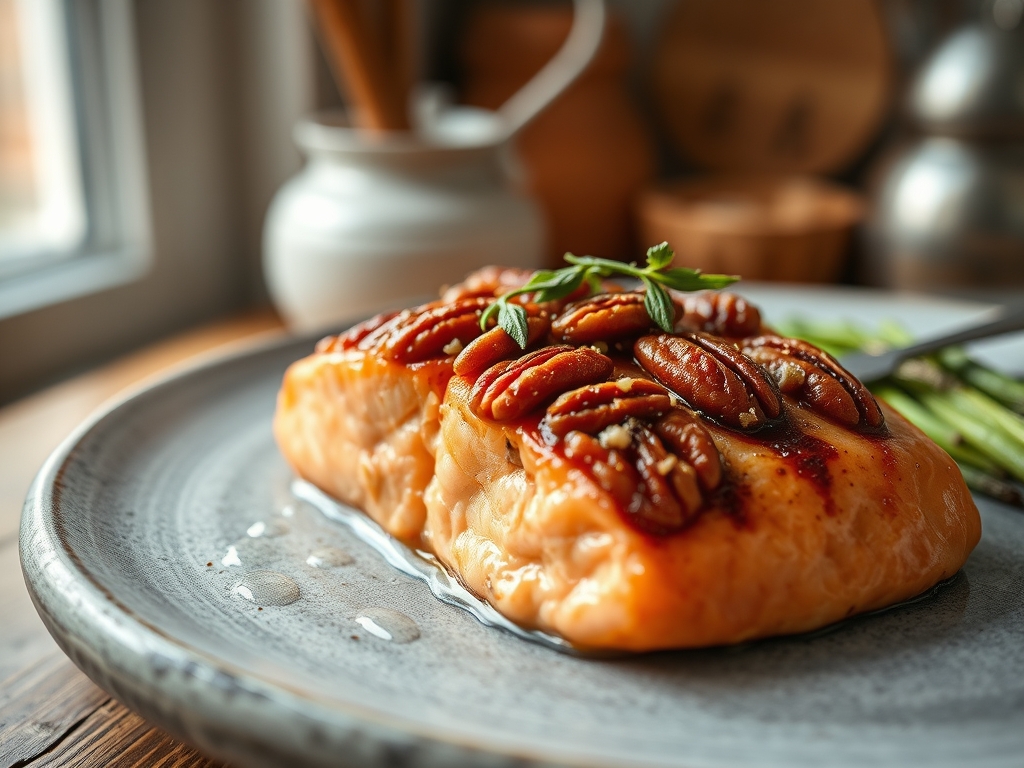
Imagine the sharp, metallic click of your heavy-bottomed skillet meeting the gas burner as the kitchen begins to warm. You are about to master the ultimate textural contrast: the buttery, flake-apart tenderness of Atlantic fish paired with a jagged, toasted nut crust. When searching for pecan salmon recipes, most people settle for a soggy topping that slides right off the fillet. We are not most people. We are going to harness the power of protein binding and lipid-based browning to create a crust so structural and savory it shatters with every forkful. This is the intersection of high-end bistro technique and weeknight efficiency.
The Gathers:
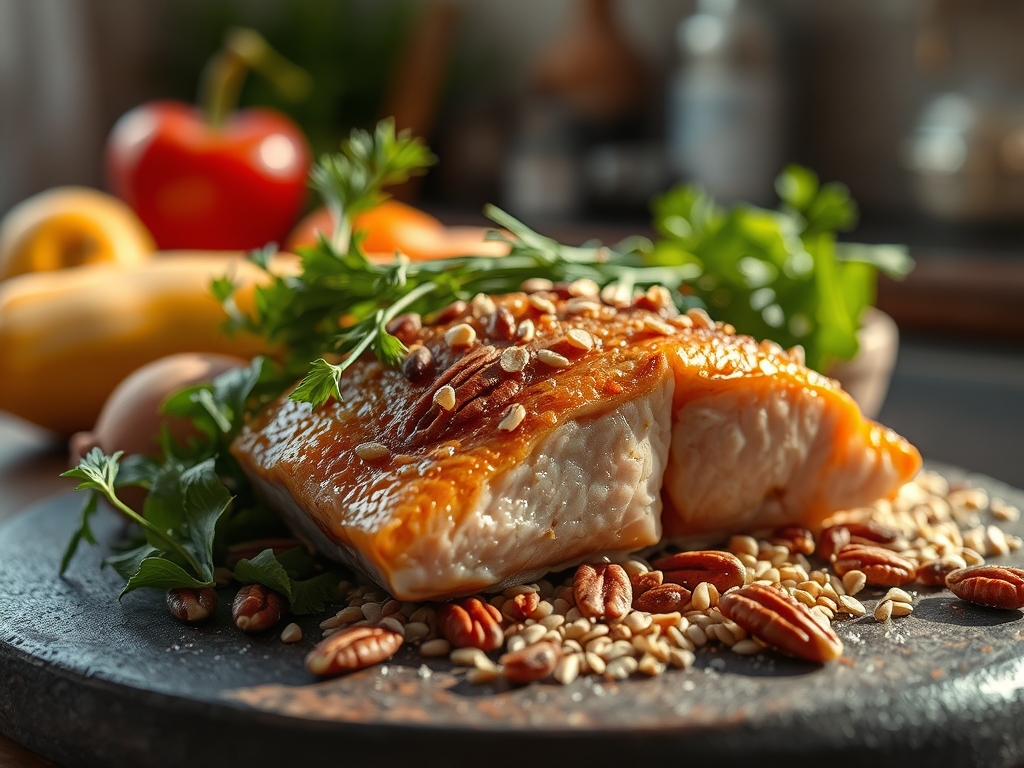
Before we ignite the flame, your mise-en-place must be precise. Start with center-cut salmon fillets, ideally six ounces each, which provide a uniform thickness for even heat distribution. You will need raw pecan halves; do not use pre-roasted bits, as we need to control the lipid oxidation ourselves during the baking process.
For the binder, skip the heavy mayo and reach for Dijon mustard and pure maple syrup. The mustard acts as a viscous emulsifier, while the sugars in the syrup facilitate the Maillard reaction, that chemical bridge where amino acids and reducing sugars create complex, savory flavors. You will also need Panko breadcrumbs for structural aeration, fresh rosemary to infuse the fats with woodsy aromatics, and a high-quality sea salt.
Smart Substitutions: If you are avoiding gluten, swap the Panko for crushed pork rinds or almond flour to maintain that essential crunch. If you lack maple syrup, a dark agave nectar provides a similar sugar density. Use a microplane to zest a lemon directly into your nut mixture; the citric oils will cut through the fatty richness of the pecans and the salmon.
The Clock
Efficiency in the kitchen is about "Chef's Flow," the art of overlapping tasks so no heat is wasted. Your total active prep time is exactly twelve minutes. You will spend five minutes pulsing your nuts and herbs, and seven minutes prepping the fillets. The "dead time" occurs during the 12 to 15 minute roast.
The goal is to reach an internal temperature of 135 degrees Fahrenheit. While the fish rests, you have a five-minute window to deglaze a small saucier with white wine or lemon juice to create a bright pan sauce. Total time from fridge to table is under thirty minutes, making this the crown jewel of rapid, high-protein pecan salmon recipes.
The Masterclass
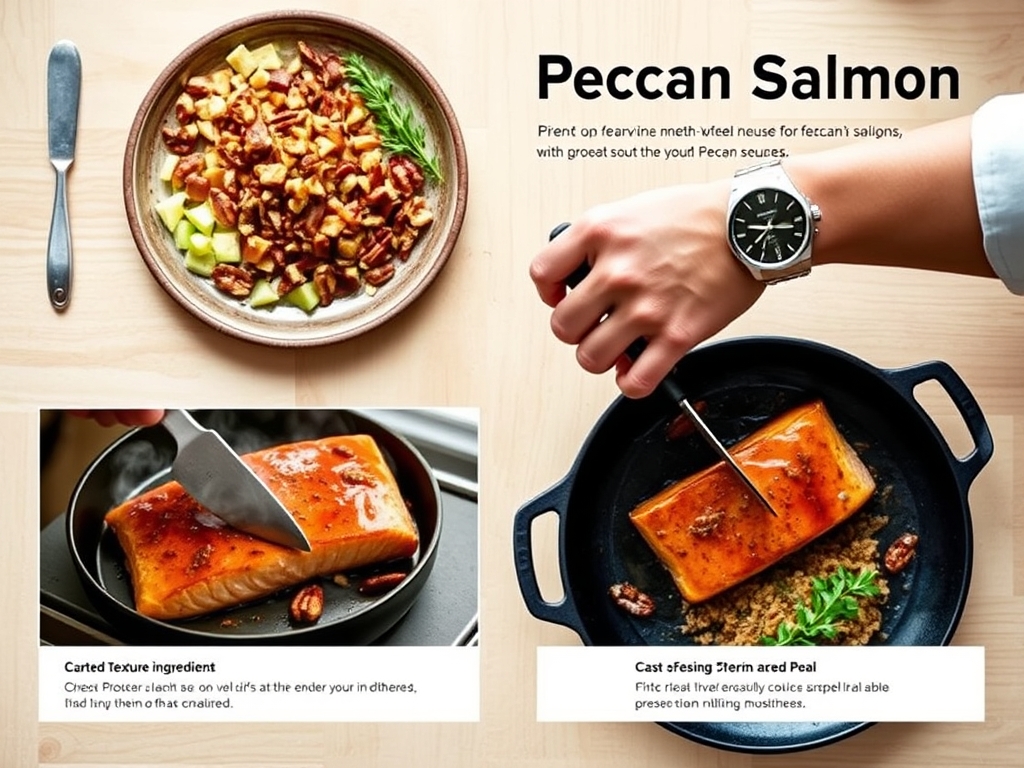
1. Temper the Protein
Remove your salmon from the refrigerator twenty minutes before cooking. Cold protein fibers contract violently when hitting heat, squeezing out moisture and leaving the fish tough. Use a paper towel to pat the surface bone-dry.
Pro Tip: This is known as thermal equilibrium. By reducing the temperature gap between the fish and the oven, you prevent the "white gunk" (albumin) from leaking out and ruining your presentation.
2. The Granular Pulse
Place your pecans in a food processor or use a chef's knife to achieve a "coarse sand" consistency. You want varying particle sizes. Smaller grains provide coverage, while larger chunks provide the signature "crunch" found in the best pecan salmon recipes.
Pro Tip: Avoid over-processing into a paste. We want to maintain the cellular integrity of the nut so the oils stay trapped until they hit the oven's heat.
3. The Emulsion Bridge
Whisk your Dijon and maple syrup in a small bowl until the mixture is glossy and thick. Brush a generous layer onto the top of each fillet. This is your "glue," but it also serves as a moisture barrier to keep the fish succulent.
Pro Tip: Mustard contains mucilage, a plant-based thickener that creates a heat-stable bond between the smooth fish skin and the jagged nut crust.
4. The Crust Application
Press the pecan mixture firmly onto the mustard layer. Do not just sprinkle it; use the palm of your hand to anchor the nuts into the binder. Place the fillets on a parchment-lined sheet pan, leaving two inches of space between each.
Pro Tip: Proper spacing allows for convection airflow. If the fillets are too close, they will steam each other, resulting in a rubbery texture rather than a crisp crust.
5. The Precision Roast
Slide the pan into a 400-degree Fahrenheit oven. Position the rack in the top third of the oven to maximize radiant heat on the crust. Watch for the pecans to darken to a deep mahogany.
Pro Tip: Use a digital scale or meat probe to pull the fish at 130 degrees. Thermal carryover will raise the internal temperature to a perfect 135 degrees as it rests on the counter.
The Deep Dive
From a nutritional standpoint, this dish is a powerhouse of Omega-3 fatty acids and manganese. The pecans provide healthy monounsaturated fats that actually help your body absorb the fat-soluble vitamins found in the fish.
Dietary Swaps: For a Keto-friendly version, eliminate the maple syrup and use a sugar-free monk fruit sweetener with a dash of xanthan gum for viscosity. For vegans, this same crust technique works beautifully on thick slabs of roasted cauliflower or "tofu steaks."
The Fix-It:
- The Crust Fell Off: You likely skipped the "pat dry" step. Moisture at the surface creates steam, which acts as a lubricant that slides the crust right off.
- The Nuts Burned: Your oven's calibration might be off. Move the pan to a lower rack or tent the fish loosely with foil halfway through.
- The Fish is Dry: You missed the carryover window. Always pull the fish five degrees before your target temperature.
Meal Prep: To reheat, avoid the microwave at all costs. It turns the pecans into mush. Instead, use an air fryer at 350 degrees for three minutes. This reactivates the oils in the nuts, returning them to their "day-one" shattered-glass texture.
The Wrap-Up
You have officially graduated from basic baking to culinary engineering. By understanding the science of binders and the importance of thermal carryover, you have unlocked the secret to restaurant-quality pecan salmon recipes. This dish is sophisticated enough for a dinner party but fast enough for a Tuesday night. Now, grab your tongs, plate that golden-brown masterpiece, and enjoy the symphony of textures you just created. You have earned every crunchy, savory bite.
The Kitchen Table
How do I stop the pecans from burning?
Position your oven rack in the center rather than the top. If the nuts brown too quickly, loosely drape a piece of aluminum foil over the fillets to deflect direct radiant heat while the fish finishes cooking through.
Can I use frozen salmon for this?
Yes, but you must thaw it completely in the refrigerator and pat it extremely dry. Frozen fish often releases more moisture (purge), so you may need extra mustard binder to ensure the pecan crust adheres properly to the surface.
What is the best side dish for this?
Balance the rich, fatty pecans with something acidic or bitter. A quick sauté of garlicky kale or a shaved fennel salad with a lemon vinaigrette works perfectly to cleanse the palate between bites of the decadent, buttery salmon.
How long does leftover pecan salmon last?
Stored in an airtight container, it remains safe and flavorful for up to two days. For the best texture, always reheat in a toaster oven or air fryer to maintain the structural integrity of the pecan crust.