
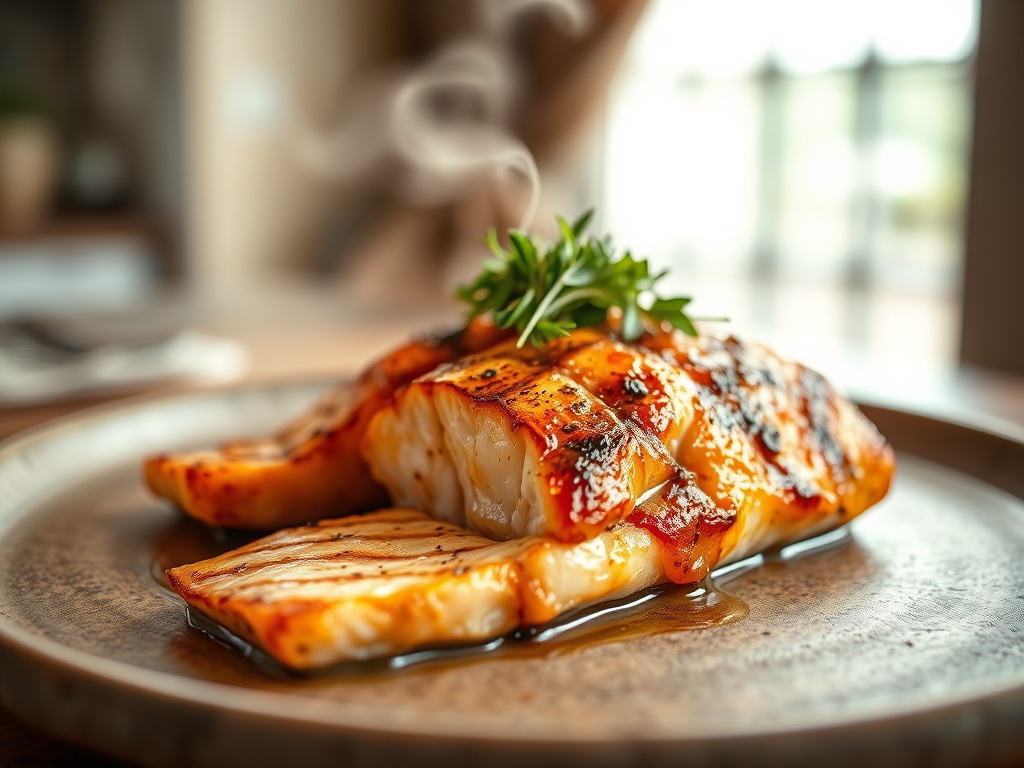
Picture the scene: a thick, marbled slab of King Salmon hitting a scorching grate, the immediate hiss of fat rendering into the flames, and that intoxicating aroma of cedar and caramelized proteins. When you search for the best grilled king salmon recipes, you are looking for more than a meal; you are seeking a masterclass in texture. King Salmon, or Chinook, is the crown jewel of the Pacific. Its high fat content allows it to withstand intense heat while maintaining a buttery, melt-in-your-mouth interior. We are not just cooking fish today; we are orchestrating a chemical transformation that turns raw muscle fibers into a piquant, smoky masterpiece.
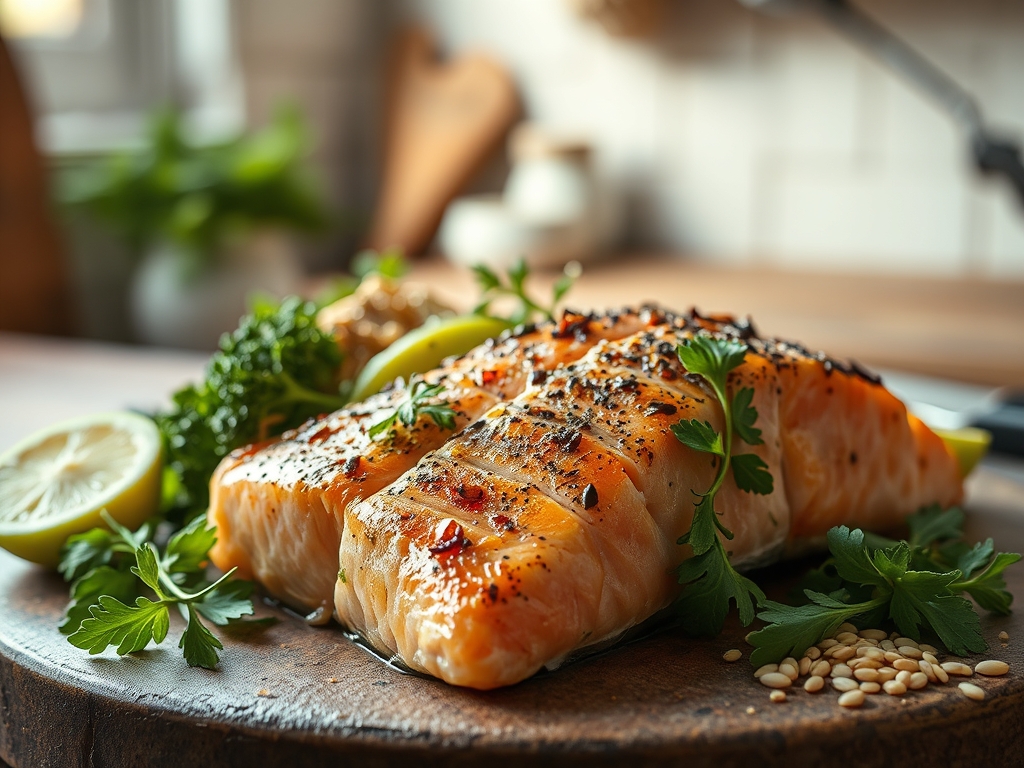
The Gathers:
To execute this properly, your mise-en-place must be clinical. You will need a 1.5-pound King Salmon fillet, preferably center-cut for uniform thickness. For the marinade and seasoning, gather high-smoke-point avocado oil, flaky sea salt, and cracked black peppercorns. To brighten the heavy fats, we will use a microplane to zest two organic lemons and a saucier to melt a compound butter infused with fresh dill and minced shallots.
Smart Substitutions: If King Salmon is out of season, Copper River Sockeye is a suitable high-fat alternative, though you must reduce the cook time by twenty percent due to its leaner profile. For a vegan-adjacent preparation for guests, large "steaks" of cauliflower can be treated with the same spice rub, though they lack the omega-3 fatty acids that make salmon so viscous and rich. Always use a digital scale to measure your salt; for salmon, a ratio of 1.5 percent salt to total weight ensures deep seasoning without curing the flesh.
The Clock
The "Chef's Flow" is all about managing thermal momentum. Your active prep time is exactly 15 minutes, which includes slicing the citrus and whisking the glaze. The salmon must sit at room temperature for 20 minutes before it touches the grill; this prevents the "thermal shock" that causes the muscle fibers to contract and squeeze out moisture. The actual grilling takes approximately 8 to 12 minutes depending on thickness. Factor in a mandatory 5-minute rest period. Total time from fridge to table is roughly 45 minutes.
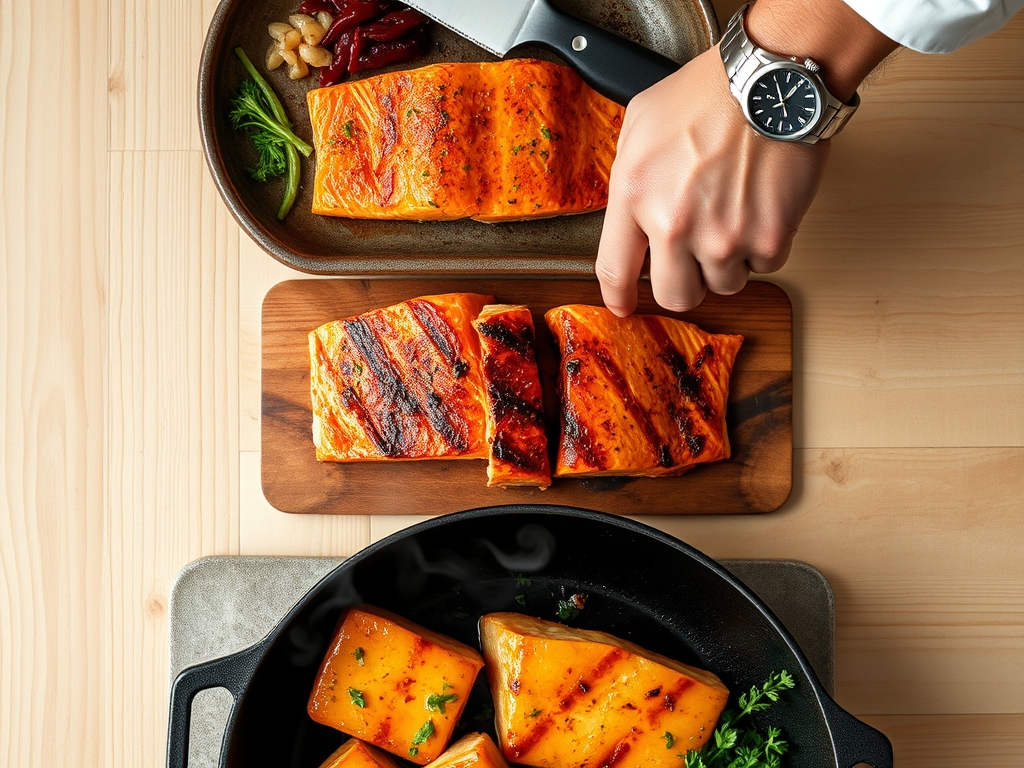
The Masterclass
1. The Desiccation Ritual
Use a paper towel to pat the skin bone-dry. Moisture is the enemy of the Maillard reaction. If the surface is damp, the heat of the grill will be wasted evaporating water rather than browning the skin.
Pro Tip: This is the science of evaporative cooling. By removing surface water, you allow the surface temperature to exceed 300 degrees Fahrenheit almost instantly, triggering the amino acid and sugar breakdown that creates a savory crust.
2. The Oil Barrier
Coat the skin with a thin, even layer of avocado oil. Use your fingers to ensure every millimeter is covered. Do not oil the grill grates; oil the fish. This creates a hydrophobic barrier that prevents the proteins from bonding with the metal of the grill.
Pro Tip: This prevents protein-metal cross-linking. When fish sticks, it is because the proteins have formed a chemical bond with the hot grate. A viscous oil layer acts as a physical lubricant and thermal conductor.
3. The Skin-Down Approach
Place the salmon skin-side down on the hottest part of the grill. Use a heavy-bottomed skillet or a grill press to apply light pressure for the first 60 seconds. This prevents the skin from curling as the collagen fibers shrink.
Pro Tip: This technique facilitates collagen denaturation. By holding the fish flat, you ensure the skin transforms into a crisp, cracker-like texture rather than a rubbery layer.
4. The Flip and Glaze
Once the skin releases naturally from the grate, use a wide offset spatula to gently flip the fillet. This usually happens around the six-minute mark. Immediately brush your lemon-dill butter onto the charred skin.
Pro Tip: This utilizes capillary action. The heat from the flesh draws the melted butter into the flakes, infusing the interior with fat and acid while the exterior remains crisp.
5. The Temperature Check
Insert a digital thermometer into the thickest part of the fillet. You are aiming for 125 degrees Fahrenheit for a perfect medium-rare. The King Salmon's high fat content makes it forgiving, but overcooking will still result in albumin (the white protein) leaking out.
Pro Tip: Understand thermal carryover. The internal temperature will rise by 5 degrees after you remove it from the heat. Pulling it at 125 degrees ensures it hits a perfect 130 degrees while resting.
6. The Rest and Finish
Transfer the salmon to a warm platter. Use a bench scraper to move it carefully to avoid breaking the flakes. Let it rest for five minutes before hit it with a final dusting of zest and flaky salt.
Pro Tip: Resting allows for moisture redistribution. During cooking, juices move toward the cooler center. Resting allows the pressure to equalize, ensuring every bite is equally succulent.
The Deep Dive
Macro Nutrition: A 6-ounce serving of King Salmon provides approximately 350 calories, 34 grams of high-quality protein, and 22 grams of healthy fats, including a massive dose of Omega-3s. It is a nutritional powerhouse that supports brain health and reduces inflammation.
Dietary Swaps: This recipe is naturally Keto and Gluten-Free. To make it Paleo, ensure your compound butter uses grass-fed ghee. If you are avoiding dairy entirely, an emulsion of olive oil, capers, and lemon juice provides that same piquant "pop" without the lactose.
The Fix-It:
- The Fish is Sticking: Do not panic or pry. Close the grill lid for 60 seconds. The steam and further carbonization will usually help the fish "self-release."
- Albumin (White Goo) Appears: This means the heat was too high or it stayed on too long. Use a saucier to create a quick herb oil to drizzle over the top; it masks the white spots and adds back lost moisture.
- Flare-ups: Keep a small spray bottle of water nearby. Move the salmon to the "cool zone" of the grill using tongs until the flames subside.
Meal Prep: To reheat, avoid the microwave at all costs. It vibrates water molecules and turns salmon into rubber. Instead, use a low oven (275 degrees) with a splash of water in the pan, covered tightly with foil. This gently steams the fish back to life without overcooking the delicate fats.
The Wrap-Up
Mastering grilled king salmon recipes is about respecting the chemistry of the ingredients. By focusing on surface desiccation, thermal carryover, and fat management, you transform a simple fillet into a restaurant-quality experience. Grab your microplane, fire up those burners, and remember that the best cooking happens when you understand the "why" behind the "how." You have got the science; now go get the sear!
The Kitchen Table
How do I know when King Salmon is done?
The most reliable method is using a digital thermometer to hit 125 degrees Fahrenheit. Visually, the flakes should just begin to separate when pressed gently with a fork, and the center should remain a translucent, vibrant pink.
Should I leave the skin on for grilling?
Yes, always. The skin acts as a protective heat shield for the delicate flesh. It prevents the fish from drying out and, when properly crisped, provides a necessary textural contrast to the buttery interior of the King Salmon.
Why does my salmon have white stuff on it?
That white substance is albumin, a protein that extrudes when the muscle fibers contract too quickly from high heat. To minimize this, let the fish reach room temperature before grilling and avoid overcooking past 135 degrees.
Can I grill frozen salmon fillets?
It is not recommended. For the best results, thaw salmon overnight in the refrigerator. Grilling from frozen leads to uneven cooking; the exterior will become tough and overdone before the center even begins to reach a safe temperature.